Wednesday, March 21, 2007

No one makes it alone...


Based on a true story, Sherrybaby is an emotional independent film written and directed by Laurie Collyer. Actress Maggie Gyllenhaal plays a young strung out single mom who recently just got out of prison named Sherry Swanson. Gyllenhaal really hooks you in with the beaming personality and knock out body yet self-destructive personality. She was put in prison for three years because of her addiction to drugs that lead her to steal anything in order to get a fix. One of her challengers is proving to her parole officer that she can stay clean and keep a stable job. The first thing she wants to do when she gets out is to be re-united with her daughter, Alexis. Sherry starts by moving into a half way house with hopes to start a new and better life. Her readjustment to the real world proves to be anything but smooth. She falls back into her old ways by having sex with a man who runs the recovery program, and telling a man at a job interview, “I’ll suck your dick if you give me the job I want”. Sherry’s five-year-old daughter has been taken care of by her brother, Bobby, and his wife, Lynette, whom are rightfully protective of Alexia because of Sherry being back around. When she sees her daughter for the first time in years, the emotion that Gyllenhaal brings to the scene makes you want to see them be together. Still in the back of your mind you know that this would be a disaster because Sherry can barley take care of herself, let alone another human being. Sherry immediately suffocates her daughter with gifts and affection to make up for lost time. Lynette is extremely attached to Alexis and is very cautious of Sherry being back. This puts Bobby is an awkward position between his wife and his sister. Gyllenhaal does an amazing job at making you believe in her love for her daughter. She has an emotional breakdown because her daughter does not call her “Mommy” anymore, and I felt the pain right along with Sherry. This is a story about how she struggles to earn the right to be in her daughter’s life. Many people try to save Sherry including her amazing brother and a friend she met at a recovery meeting, but no one can save Sherry but herself. Sherrybaby is a riveting tale of personal failings and recovery, which I believe establishes Gyllenhaal as one of the best actresses of her generation. I would recommend this movie to anyone who feels that they can handle the drama and depressiveness the movie portals. I would definitely rate this movie five stars, as I feel it deserves it.

Tuesday, March 20, 2007

Moving at the speed of life we are bound to collide with each other.


A reflection on the overlooked events of racism in everyday life in Los Angeles California, Crash can draw in large audiences because of the diverseness in actors and actresses and the emotional appeal that the movie provides. This movie can lead you to reflect on yourself and others while doing some serious soul searching.

Crash was released in 2005 and directed by Paul Haggis. If you don’t know him from his work with Crash then you may know him from the movie Million Dollar Baby. Crash won three Oscars, which included Best Achievement in Editing, Best Motion Picture of the Year, and Best Writing, Original Screenplay. Haggis directs the film with up close shots that make you feel as if you know the characters personally, like you are living the scene with them.

The movie starts and ends at the same place, with a car crash. It then tells what happened in the thirty-six hours in between. The characters do not know each other personally but yet they are interconnected in many ways. There are many collisions that happen between the characters of different races and economic backgrounds. The story is told by each one of these individuals and you get to see how unique each situation is. There is a detective who has a drugged mother and has a thieving younger brother. The brother and his other thieving friend are constantly theorizing on racism. There is a white attorney and his wife who makes it no secret that she hates people not like her. There is a racist white cop who also cares for his sick father at home. This cop has a younger partner who watches him molest a successful director’s wife and can do nothing about it. Lastly there is a Persian man who buys a gun to protect his shop and family who then encounters a Hispanic locksmith and his young daughter.

My favorite quote is one of the first lines from the movie, “It's the sense of touch. In any real city you walk, you know? You brush past people. People bump into you. In L.A., nobody touches you. We're always behind this metal and glass. I think we miss that touch so much, that we crash into each other, just so we can feel something.” This really does explain big cities in The United States. People walk by other people everyday. Maybe these people really do miss being touched, so they crash into people just to feel something.

I would recommend this movie to anyone and everyone. I think it is a must see because it really opens your eyes and teaches you a valuable lesson about racism, discrimination and stereotypes. I urge you to see this movie and watch it with an open mind and learn something about yourself. It shows that all of us, no matter what race we are, we all have stereotypes and we sometimes cannot hide that fact. I would give it two thumbs up!

Tuesday, March 13, 2007

Ever Heard Of Philo T. Farnsworth???


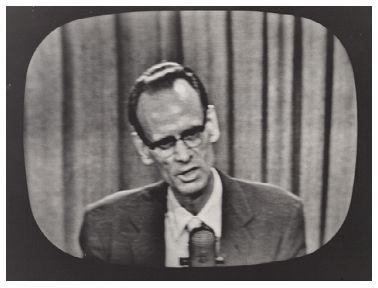
Philo T. Farnsworth was a Mormon farm boy who just happened to invent the electronic television. He has transformed what we see as media today. Unfortunately he is not a well-known figure in American history like Alexander Graham Bell and Thomas Edison. You will not find his name in any history book, but instead will find Vladimir Zvorykin’s name. Why is this?

At the young age of twenty Philo was creating the television with financial support from local businessmen. Ironically, Vladimir who worked for RCA was also trying to create the television at the same time. When applying the dominant and subordinate groups to this example, it is obvious who was which. Farnsworth was the subordinate because he was part of the white lower class and therefore had no wealth or power. RCA was part of the dominant group because they were a major corporation that included money and power. RCA had so much power that they sent someone to copy the blueprints of Farnsworth’s work. Farnsworth beat RCA against the odds and got a patent for his electronic television. RCA, using their money offered him 100,000 dollars for the patent, but he refused. RCA couldn’t handle the idea of a small town poor man getting credit for the television, so they lied cheated and stole to try to get the claim. Yet, Vladimir is the one who is remembered for the invention. This is because they put a ban on commercial television and his patent would run out and television production would become public. The dominant group eventually destroyed Farnsworth by him suffering from depression and alcoholism because of the stress they imposed on him.

This story proves why the dominant (powerful and wealthy) group always comes out on top no matter how hard the subordinate fights. It also answers the question of why Vladimir goes down in the books as the one who invented the television, because history is written by the powerful. We see this kind of story repeatedly throughout history; the “little” man always loses to the “big” company.

Monday, February 26, 2007

Can We Ever Be Beautiful Enough?


The Bluest Eye was written by Toni Morrison and set in Lorain, Ohio in the 1940s. This is the town where Morrison grew up, and it is narrated from the view of a nine year old, which is the age she would have been the year the novel takes place. We have been talking in class about authenticity and I believe this novel is a perfect example. Toni is a black woman telling a story about two black families who is struggling with beauty, love, power and fitting in. I believe the goal of this novel was to make a statement about the harm that racism can do to the most helpless member of a society, a young girl.

There were many symbolisms in this story, but I am going to focus on the main one, beauty. Beauty is a huge part of this novel and its symbolism is everywhere. Pecola in the beginning was living with the MacTeer family, because Pecola’s father burnt down their home. Claudia and Frieda MacTeer feel bad for Pecola and befriend her. They find out that Pecola loves Shirley Temple and all the she represents. Pecola comes to believe that beautiful is having white skin blue eyes, and therefore she herself is ugly.

Another symbolism of what is beautiful and what is not is the Breedlove family. Pecola’s father is an alcoholic and abusive, therefore he is ugly on the inside. He is also seen as ugly on the outside because he is not white and does not have blue eyes. Pecola’s mother goes to the movies often to watch what she sees as beauty, the actresses and actors on the movie screen. They acknowledge the fact that they are ugly because society gives them no evidence otherwise.

No one ever noticed Pecola and she believes that if she could just have blue eyes, then she will become beautiful and noticed. She believed that things would be different. She thinks everything in her life will look better through these blue eyes, because the way people see her affects the way she sees the world. She prays to God every night asking him for blue eyes. One day Pecola’s father Cholly comes home and decides to rape her. This pushes Pecola to go to Soaphead Church and ask him for blue eyes since praying to God doesn’t seem to be working. He knows he cannot help her and feels bad about this, but he goes on to tell her that it is possible.

Pecola becomes pregnant with her fathers baby, and everyone in the neighborhood wants this baby to die except Claudia and Frieda. They see the baby as a description of beauty.

Pecola eventually goes crazy believing that her wish has come true and that she has blue eyes. She still is not happy with herself because she becomes obsessed with the fact that her eyes may not be the bluest. This proves that beauty does not equal happiness or satisfaction. Yet, this issue is still a problem today. Everyone wants to be beautiful, but can we ever be beautiful enough?

I would recommend this book because there is so much symbolism in it that makes the story intriguing. I feel that anyone who reads this book will benefit from it because you are seeing an honest and truthful viewpoint of racism and struggle in our society.

Saturday, February 17, 2007

What is a Documentary?

Before I took this class, I had a picture in my head of what a documentary was. I thought a documentary was just a boring film or television program that presented facts about an event that happened in history. I recently learned that this is completely wrong. A documentary can be shown my many mediums, (but mostly film or T.V. program), based on facts whose purpose is to tell a story. I believe the main goal for the filmmaker is to educate us about something that we do not know. The audience should be able to accept the information presented in the documentary as fact.


Is a reality series a documentary? There is a fine line between these two, but there is a difference. I think the main distinction separating documentaries from today’s reality series is that documentaries attempt to show us the truth rather than a story being staged for the camera or audience. Reality shows put participants in staged situations for entertainment purposes. Documentaries do not show the filmmakers opinions and personal feelings.


One of my favorite documentaries was March of the Penguins. This is a perfect example of a documentary and what it should posses. This dramatic documentary told a story of a penguin’s life as it is repeated every winter for thousands of years. The director, Luc Jacquet goal was to tell a factual story that had never been told before. This was taped in Antarctica where there has never been a generation of men to witness it because man has never settled in the Antarctic. The classical and jazz music along with the narrator, Morgan Freeman’s voice was just another added great characteristic that helped make this movie one of my favorites. Not only was I entertained with the documentary, but I also learned so much about the species. One of the really amazing things about this documentary was the director fell into making this by accident because he actually studied biology. This proves that anyone (including us non-publication majors) can make a good documentary. He states… “At the time, the assignment was to film images of emperor penguins... The only problem was that I had never held a camera in my life. So I started with a ten-day training period to learn how to film with a 35mm camera.”
Obviously this is one of many documentaries, but I just thought it was a great example/definition because it is so factual and well put together. One of my goals now is to see more documentaries so that I can get a broader definition. I am going to start with some more controversial documentaries like Fahrenheit 9/11 and Inconvenient Truth. I will let you know what I think….

Saturday, February 10, 2007

30 Days Reaction- Part II

Frank got really close to the Gonzalez’s oldest daughter Armida, who was well educated and was applying to colleges. One thing that bothered me about Armida was that she made a comment about how she was hoping to go to school for free and was trying to get scholarships and grants to help her do so. This makes me furious because I am paying a lot of money to come to Westminster and I am an American citizen. She is an illegal alien and is going to get to go to school for free. I don’t think that this is fair because I believe that the money the government is going to give to her should go to an American citizen who deserve it just as much as she does. Armida got into a few heated debates with Frank, but in the end, they both learned something from each other. Frank also stated that if she became a legal citizen that he would sponsor her in college because he was so fond of her and her abilities.

A changing point in this episode is when Frank went to Mexico to visit the Gonzalez’s family. He saw how bad their lives were there and this helped him realize why they would want to come to America. The Gonzalez’s had not seen their family in twelve years and when Frank brought back a tape of them saying hello, I got a little emotional because I felt bad for the family who was left behind. Frank realizes that he cannot blame them for wanting a better life style.

When the thirty days had passed, Frank had changed from the simple to the complex. He didn’t completely change his views about illegal immigrants, but he was walking away with a different perspective. He remained a minuteman but did not have as strong of feelings as before. Frank understands why they would want to leave Mexico and come to the United States, but he still feels that they should do so legally like his family did years ago. He also understands that it is hard to do this legally and is therefore torn between two opinions. He used to feel that Mexicans were trying to start a Revolution with their rallies but in the end I think he realizes that they just want to be legal immigrants and are fighting for what they think is right. Frank states: “There comes a time when you love people for who they are, all politics aside”. This statement proves that he has changed from the simple to the complex. Walter Lippman states in Chapter One of Public Opinion: “The only feeling that anyone can have about an event he does not experience is the feeling aroused by his mental image of that event. That is why until we know what others think they know, we cannot truly understand their acts.” This completely explains Franks situation about how he judged them before he knew who they really were, and then changed his mind once he got to know them.

In conclusion, I really enjoyed this different view of a reality series. When I first started watching this episode I thought to myself that I could predict the ending that he was going to change into a completely different person. The ending surprised me because he changed but not completely. This shows that the gatekeepers wanted to show the truth, and not what everyone wanted to see which was that he completely changed his point of view. Agenda setting claims that what the media finds important will eventually be mirrored in what people think are important, and I think that the gatekeepers avoided this nicely by letting you make your own opinions about the show. I recommend this series to anyone who wants to see both sides of great debates going on today in our world.

30 Days Reaction... Part I

We all know what it is like to be sitting at home, looking through the channels on television and finding nothing to watch, especially in the summer. It seems these days that all reality shows are the same, “Who Wants To Be a Millionaire”, “Survivor”, and “The Real World”. I have this stereotype in my head that all reality shows are all staged and are only on television for the drama. What changed some of these thoughts in my head was watching a show on the reality series “30 Days”.

“30 days” is a reality series that airs on FX at 10 o’clock at night. This is one of the better hours for TV shows in the summer. “30 Days” has to compete with other sitcoms and reality shows, and I honestly believe it has great odds of beating other shows out. The target audience would be young and older adults because they would have a better understanding of stereotypes and closely heated debates. Morgan Spurlock is the creator of “30 Days”. You may know him from his movie “Super size Me”, where he put his own body on the line, living on nothing but McDonald's food for an entire month. He is known for putting himself or other people in situations that are outside their comfort zone. “30 Days” a documentary/reality show because Spurlock documents people’s life changing experiences while they are living in other people’s shoes for a whole month. The subjects he usually focuses on are minimum wage, religion, sexual orientation, and jail.

The episode “Immigration” was about a patriotic minuteman, someone who keeps illegal aliens out of United States, named Frank George who moves in with a family of illegal aliens for thirty days. One way that they made this episode more emotional was by having the male be a legal immigrant from Cuba, which was able to speak Spanish with the Gonzalez family from central Mexico. Frank lived in a small house with a family consisting of seven members of which only the two youngest being American citizens. Frank makes it very clear that if you did not enter this country legally that you should be departed back to your own country and this tended to make conversations tense.

One of the big eye openers of the show was watching what the parents, Rigo and Patty, did for a living and how much they got paid. Rigo was a maintenance man at one of the apartments near their house, where he was only paid 15,000 dollars a year. Rigo wanted to open up his own business so that there would be more jobs for immigrants in the United States. Yet, he is unable to fulfill this dream because he is an illegal immigrant. I respect Rigo for his ambitions and wanting to make the world a better place. We tend to think illegal immigrants as being lazy, and this proves he has ambitions and wants to make things better here. He states that he does the jobs that no American would want to do, but I think that in some ways they are still taking some of our jobs here, because I am sure that some American citizen would be a maintenance man if it got him off the streets. Patty on the other hand separates recyclable for only five dollars total. This also makes me realize that she is not lazy and is willing to work, yet can only find a job that pays nothing. She still goes to work everyday so she can buy Christmas presents for her family.